E-commerce Microservices Platform
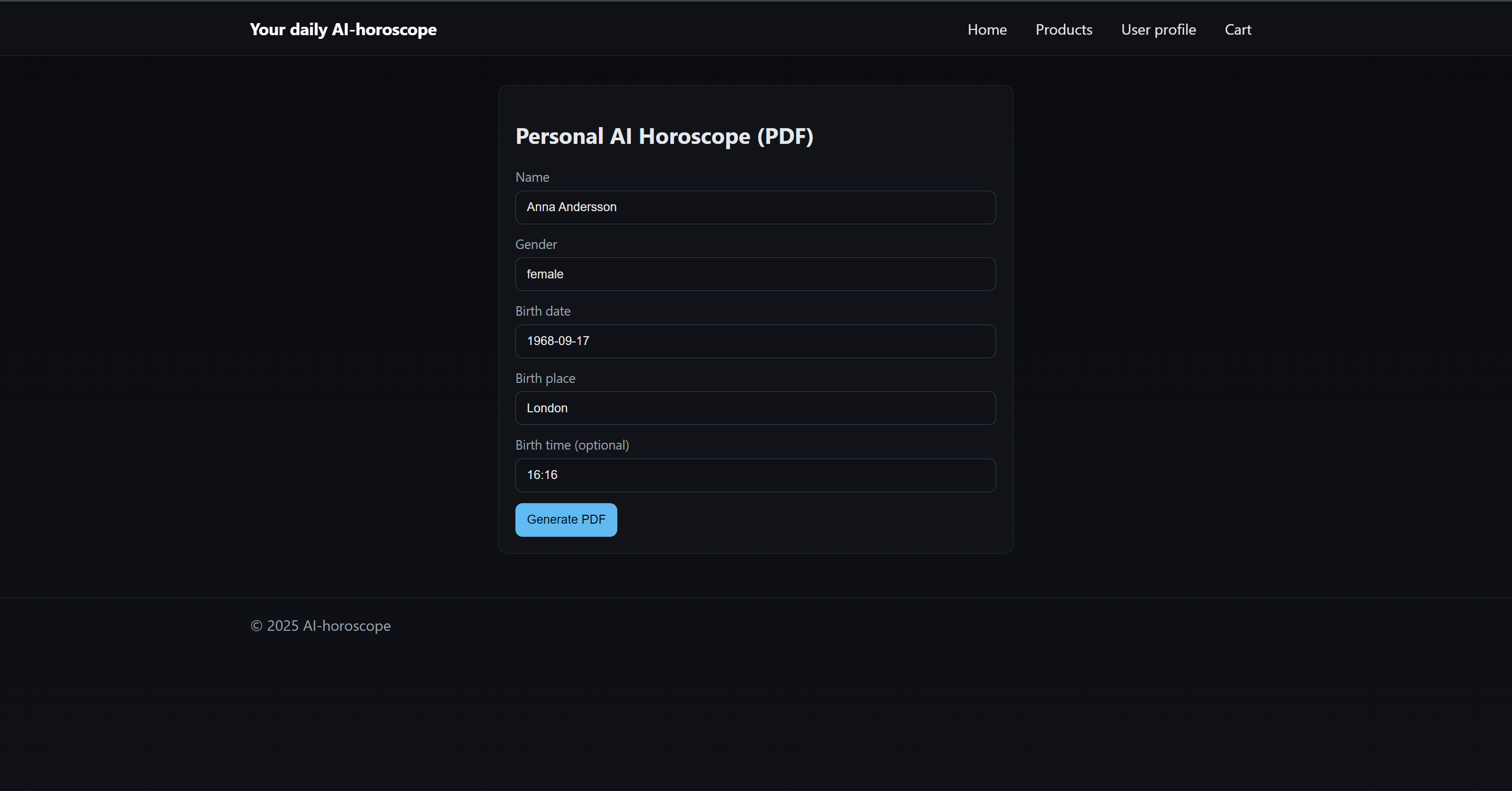
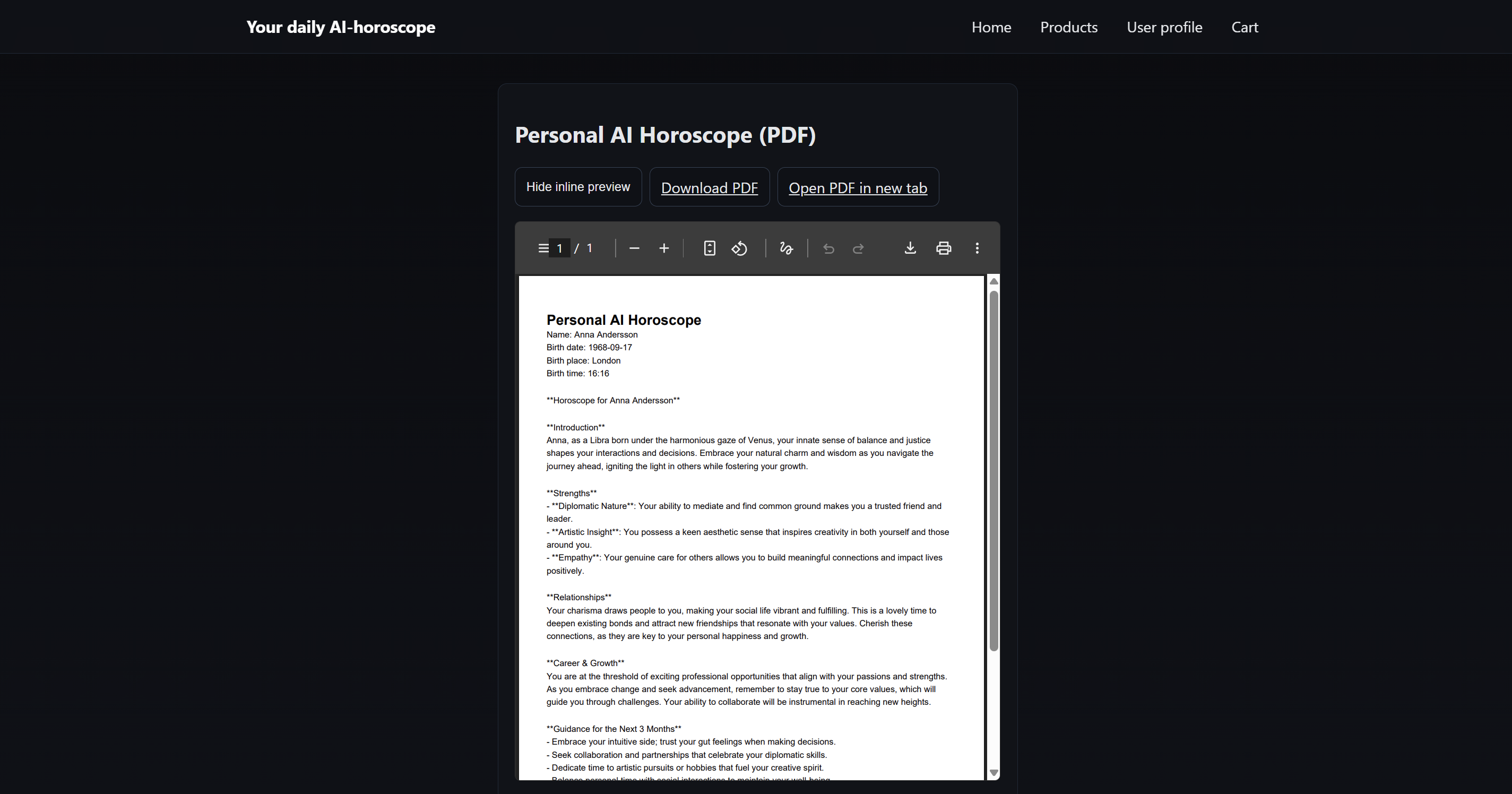
A modular e-commerce platform built with a microservice architecture where each service is independent and can be scaled individually. The system handles products, orders, users and payments through separate services that communicate via REST APIs. It also includes AI-generated horoscopes as a digital product with PDF generation.
Technical overview
- Tech stack: React 18 + TypeScript (frontend), Spring Boot 3.5 + Java 21 (backend)
- Architecture: Microservices with three independent backend services (User, Product, Order)
- Authentication: JWT-based authentication with a centralised user service
- Deployment: Docker Compose for local development, Docker Hub for image distribution
- Testing: JUnit 5 with JaCoCo coverage reports for each microservice
Architecture & integrations
The project follows microservice principles where each service has its own responsibility and database. Services communicate via REST APIs and can be deployed and scaled independently of one another.
- User Service: Handles registration, login, JWT tokens and user permissions
- Product Service: Product catalogue with CRUD operations, image handling and stock management
- Order Service: Order handling, payments via Stripe and AI-generated horoscopes
- Frontend: React SPA with Vite, served via Nginx in Docker
- OpenAPI/Swagger: Automatic API documentation for all backend services
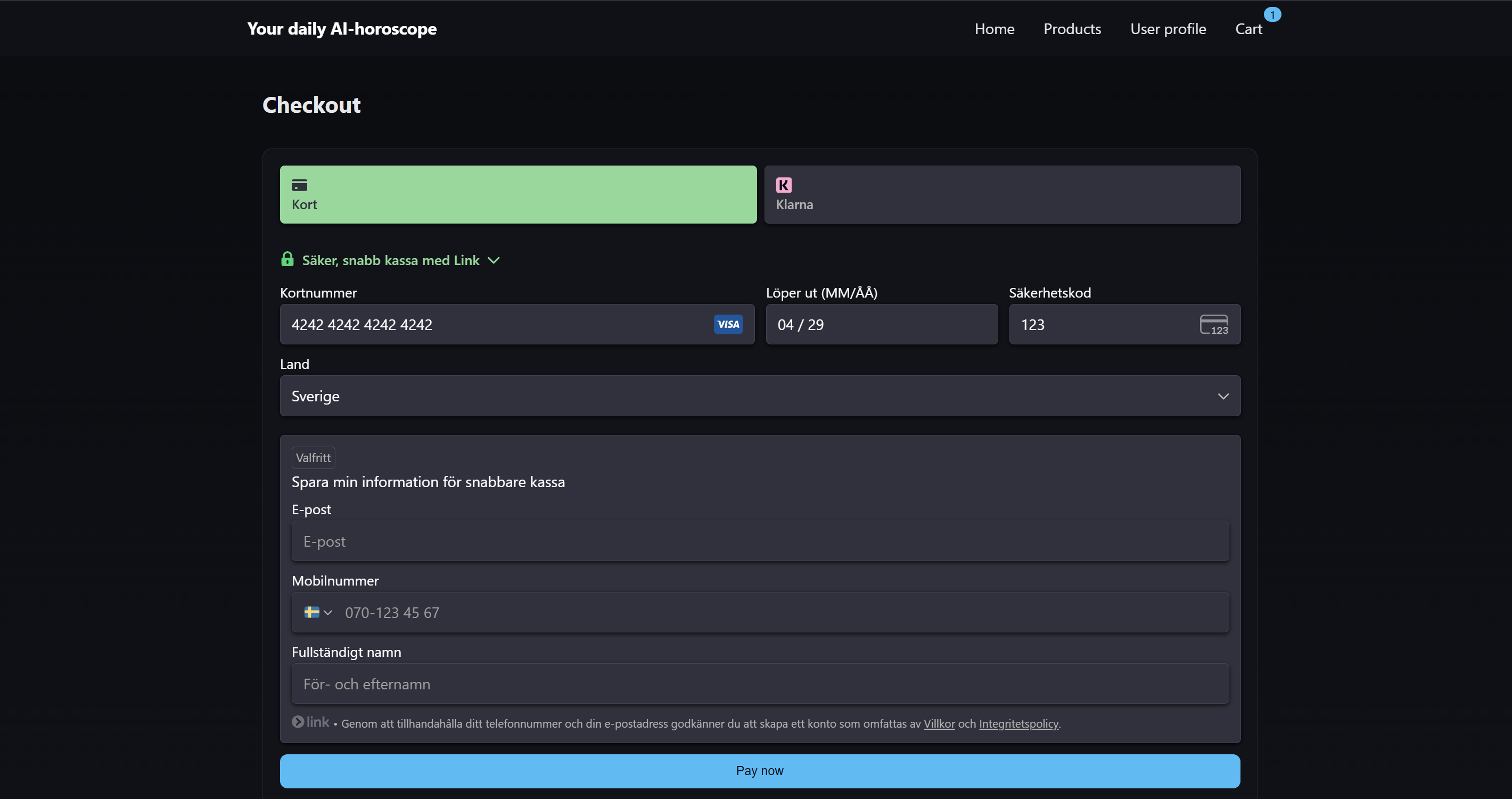
- Stripe integration: Payment Intents API for secure payments and webhook handling
- OpenAI/1min.ai: AI generation of personalised horoscopes based on user data
- OpenPDF: Generates PDF documents for digital products (horoscopes)
- Spring Actuator: Health checks and metrics for each service
Screenshots

Key features
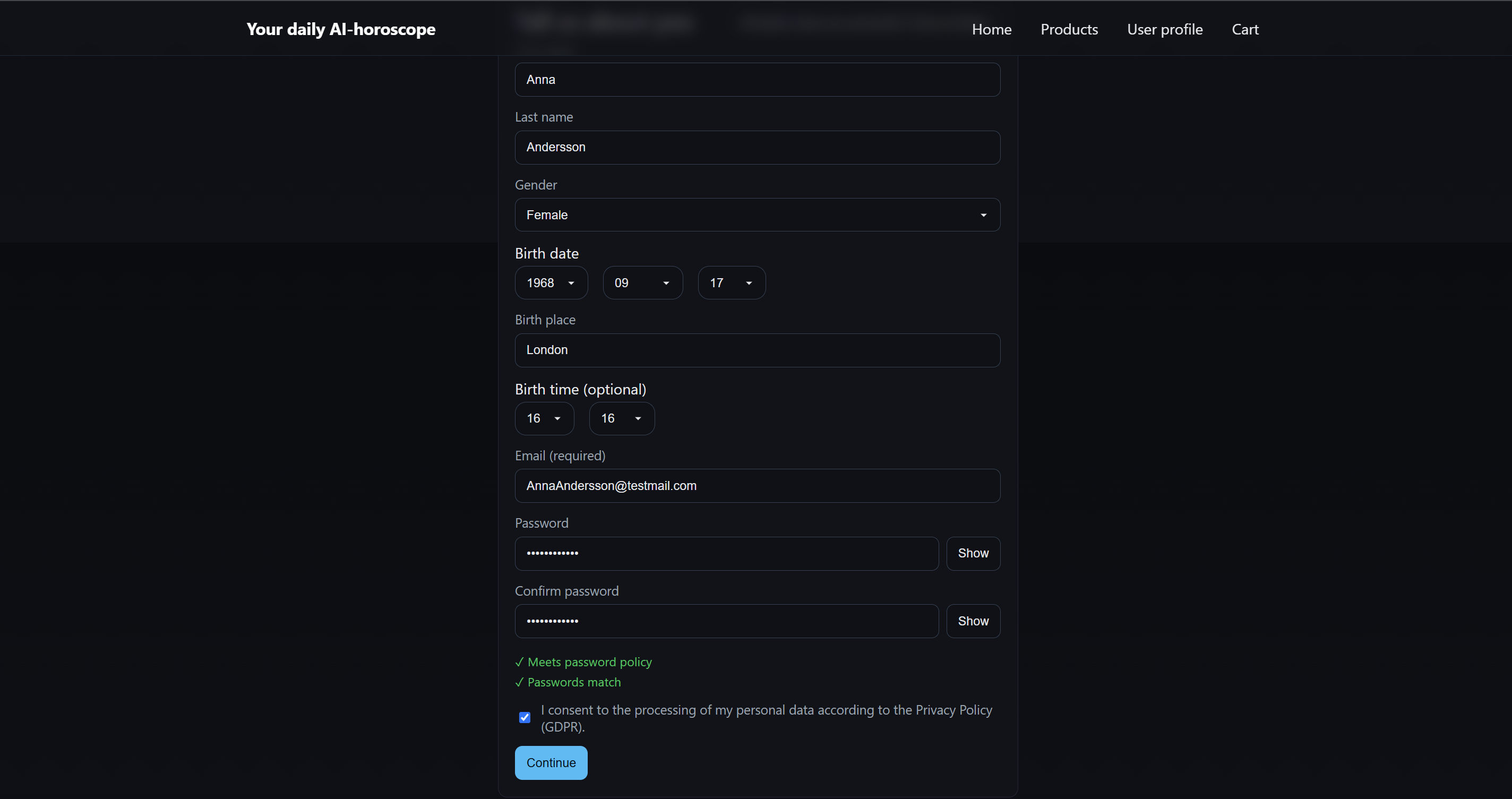
- User management: Registration, login, profile management and activity logging
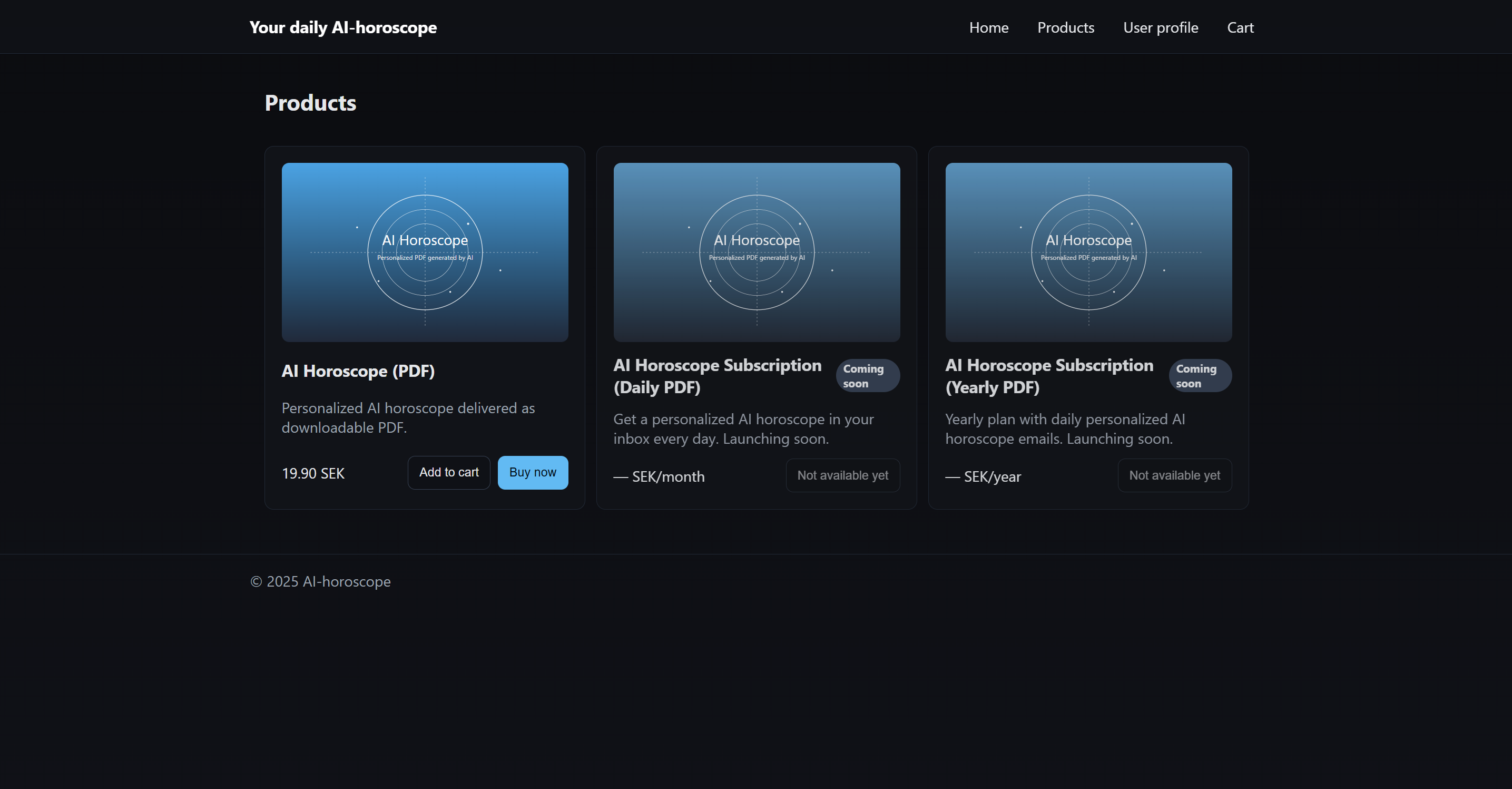
- Product catalogue: Create, edit and delete products with image upload and categorisation
- Stock management: Real-time stock updates with reservation at purchase
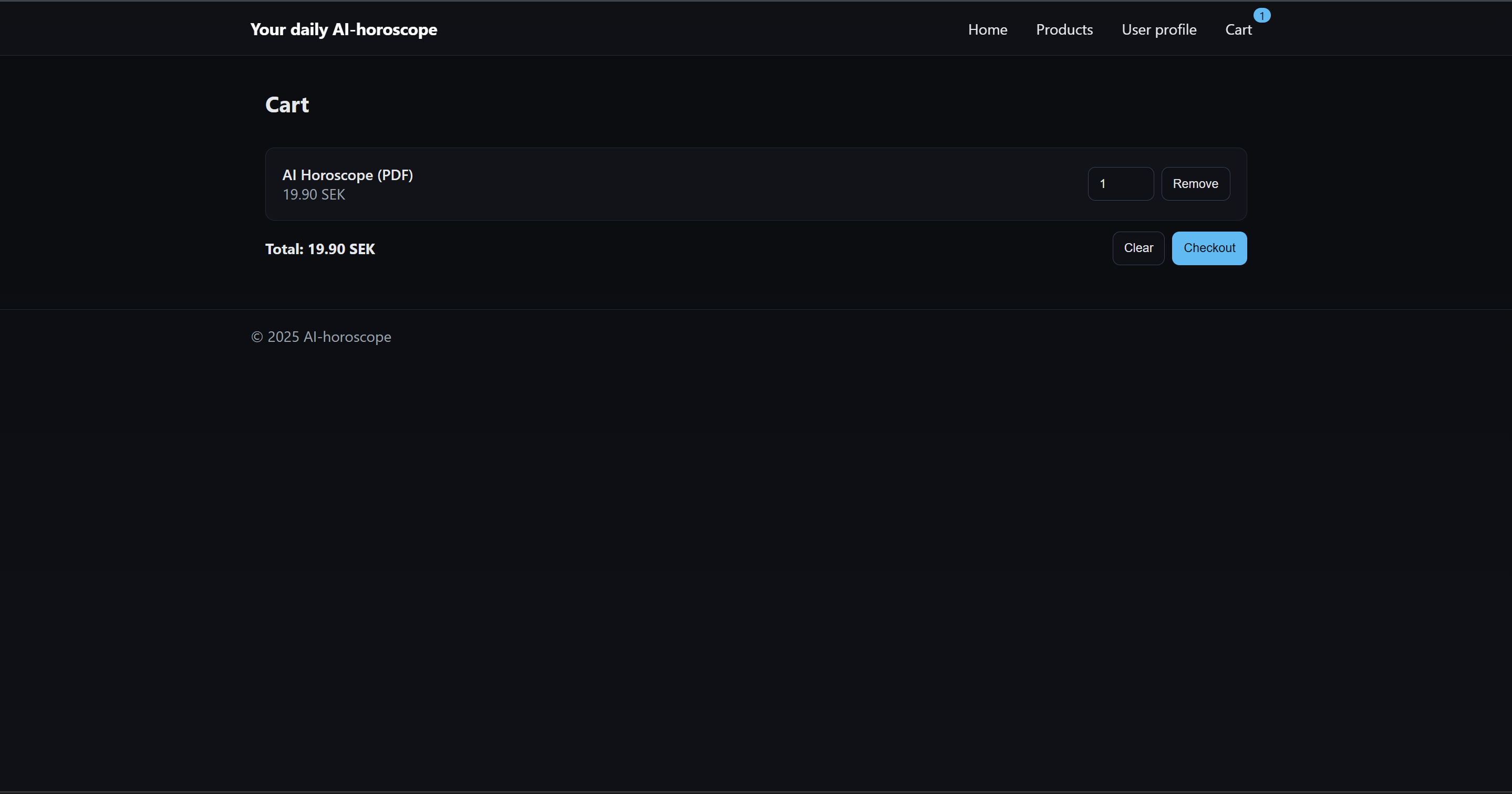
- Order handling: A complete order flow from cart to confirmation, with order history
- Stripe payments: Secure card payments with Payment Intents and webhook validation
- Entitlement system: Management of digital rights and consumable products
- AI horoscopes: Personalised horoscopes generated with OpenAI and delivered as PDF
- Analytics: Order statistics and sales data for administrators
- Service-to-service communication: The Order Service calls the User and Product services for validation
Microservice architecture
Each service is fully independent with its own database (H2 for development) and can be deployed separately. This gives the flexibility to scale specific parts of the system based on load.
- Separation of concerns: Each service has a clear responsibility without overlap
- Independent deployment: Services can be updated without affecting other parts of the system
- Scalability: Individual scaling of services based on need (e.g. more Product Service instances)
- Resilience: If one service goes down, the whole system is not necessarily affected
- Docker Compose: A simple local development environment with all services and networking configured
- Version control: Each service has its own Git repository as a submodule
Lessons
This project gave me a deep understanding of microservice architecture and the challenges that come with distributed systems. Designing API contracts between services, handling service-to-service communication and ensuring data consistency across service boundaries requires careful planning. Implementing JWT-based authentication shared across all services taught me the importance of centralised user management and secure token validation.
Working with Stripe webhooks taught me the importance of idempotency and secure webhook validation to avoid double charges. The Docker Compose configuration made it possible to run the whole system locally with realistic network conditions, which sped up development considerably.